
Same test, opposite results: How Flatlay images lifted revenue for Peso but not for LFDY

Get an overview
About LFDY
LFDY started in a 40-square-meter space in a Düsseldorf courtyard, with a message and a self-funded printer. What began as an independent vision has grown into an international movement rooted in the culture of a generation.
Its collections draw on mass movements, open-minded attitudes, free thinking and street culture. Eleven years after its founding, LFDY is present across Europe, with flagship stores in Paris, Amsterdam, London, Berlin, Cologne, Düsseldorf, Hamburg and Munich.
Starting Situation
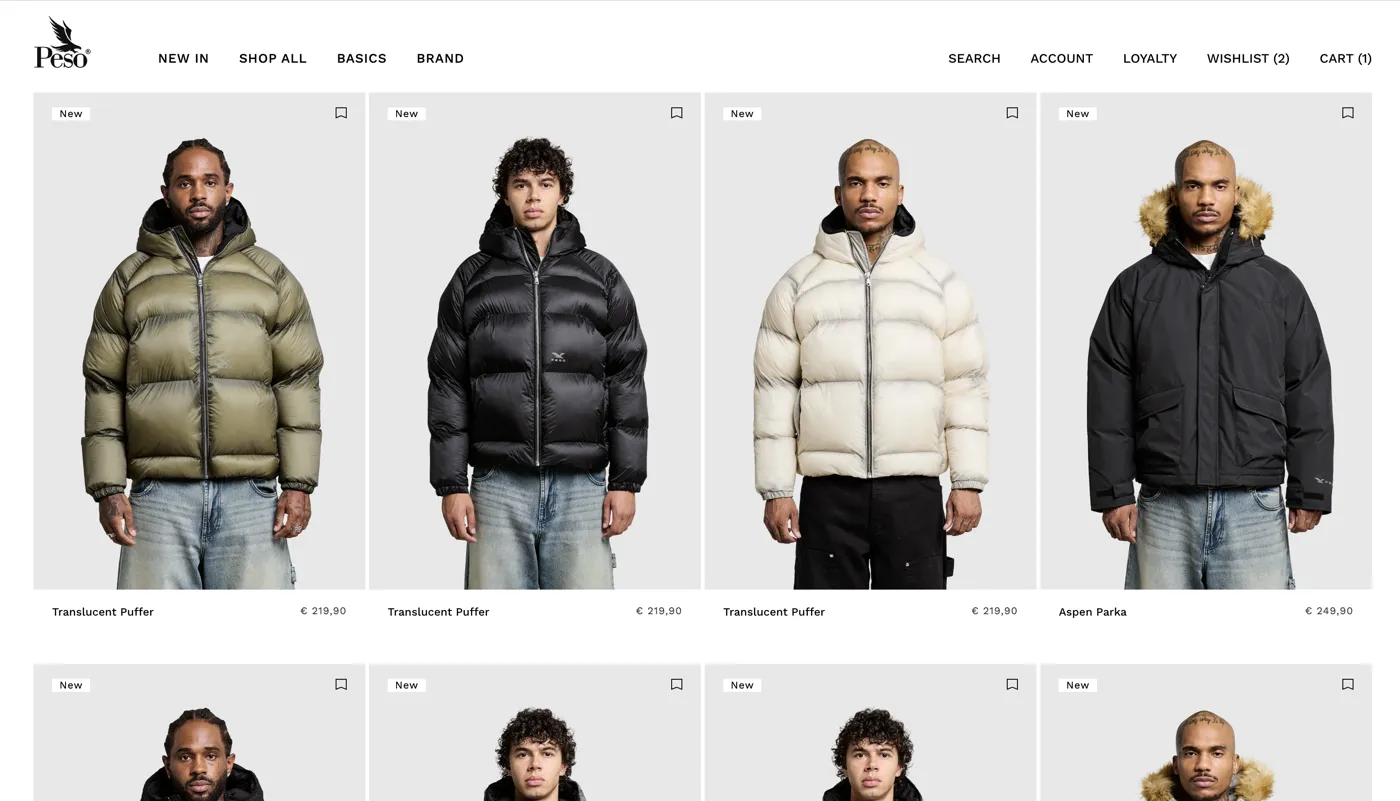
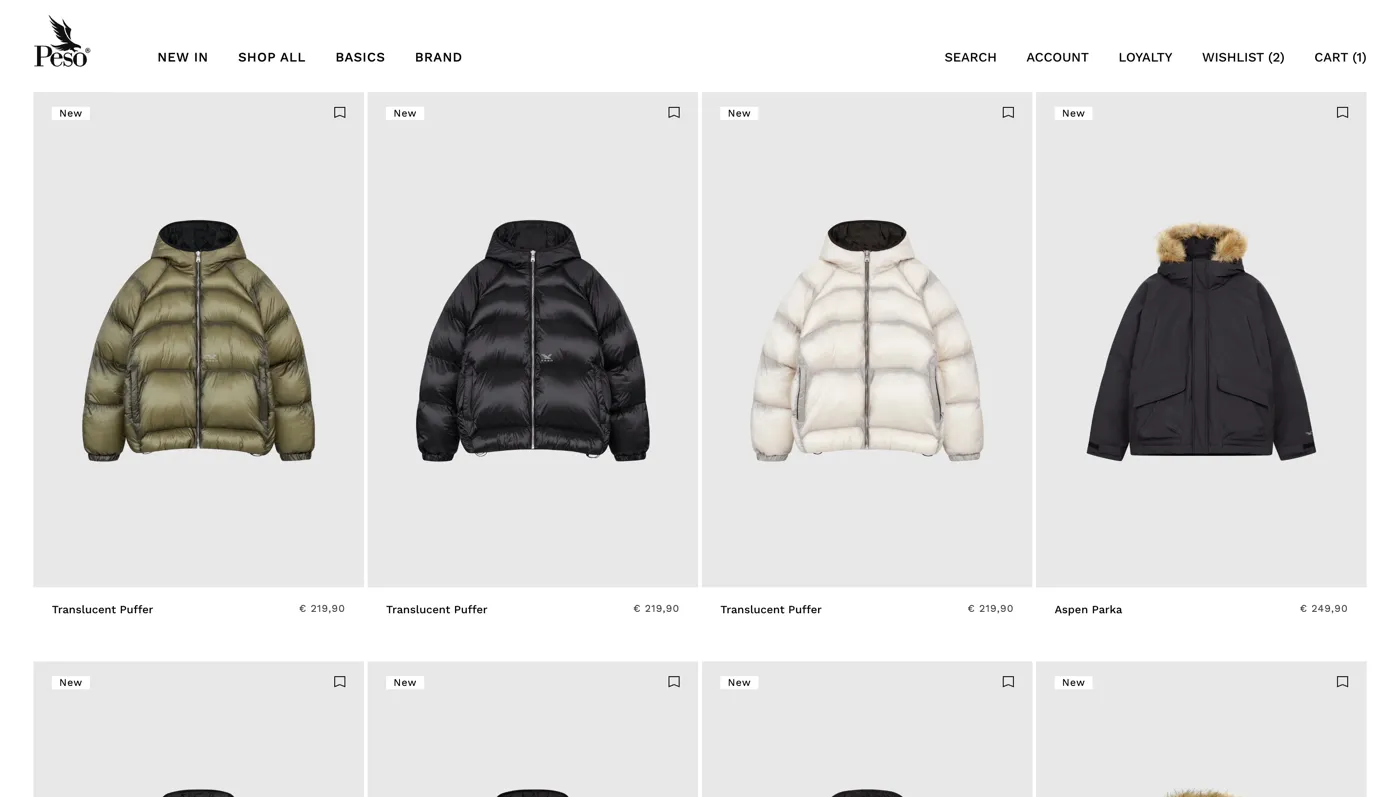
In the LFDY and Peso online stores, users could switch between a model view and a plain flatlay view on collection pages. The team often changed which view was shown by default, so they wanted to reevaluate that default with data.
The test ran across all collections of both stores. This kept the user journey consistent and included every product type.
Goal: Understand whether product styling and the look of the models influence purchase behavior.
Variations
Hypothesis
If we display flatlay images instead of model images as the primary product image across relevant apparel collection pages,
then the different presentation may influence how users evaluate and purchase products, which may increase Revenue per User,
because flatlay images provide a clearer and more isolated view of the product, while model images provide additional context regarding fit, proportions and styling.
Peso
LFDY
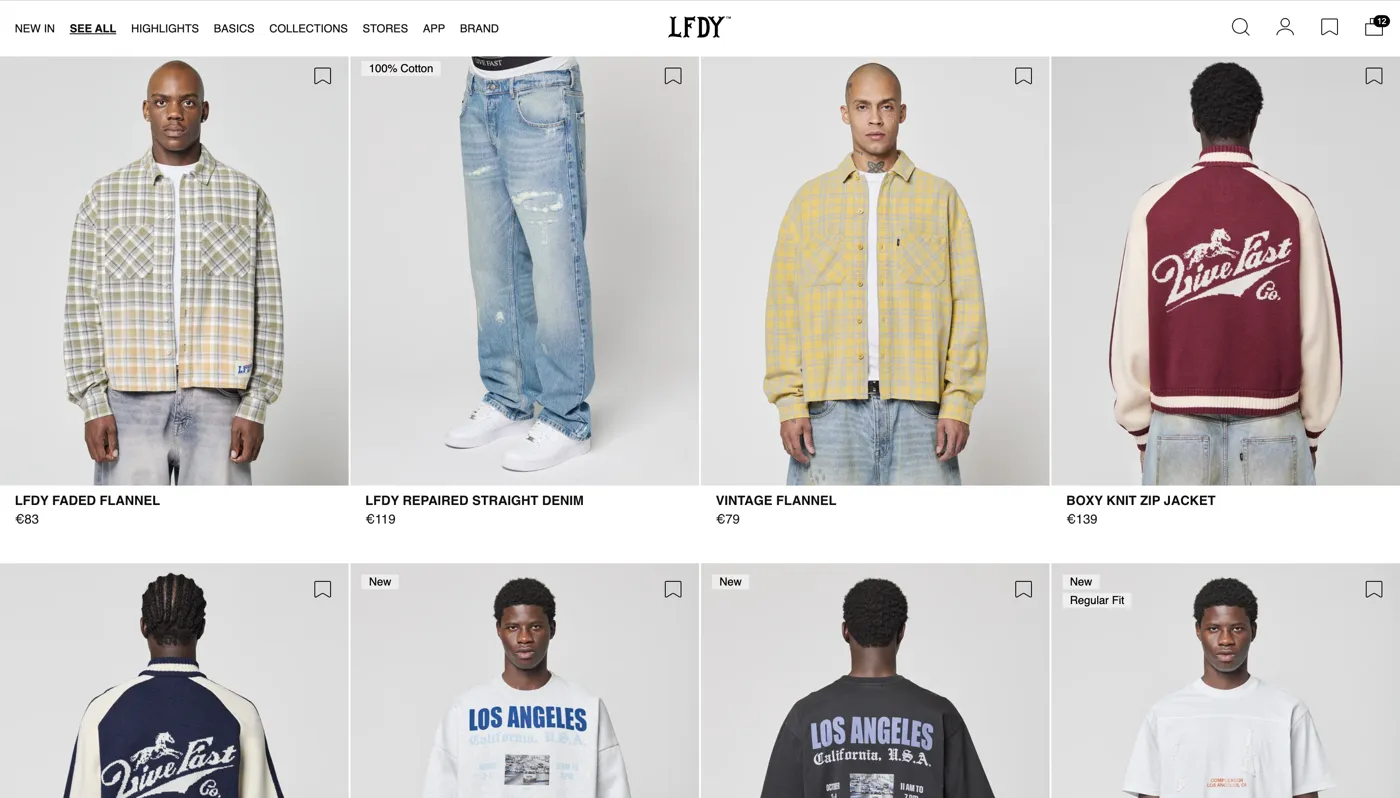
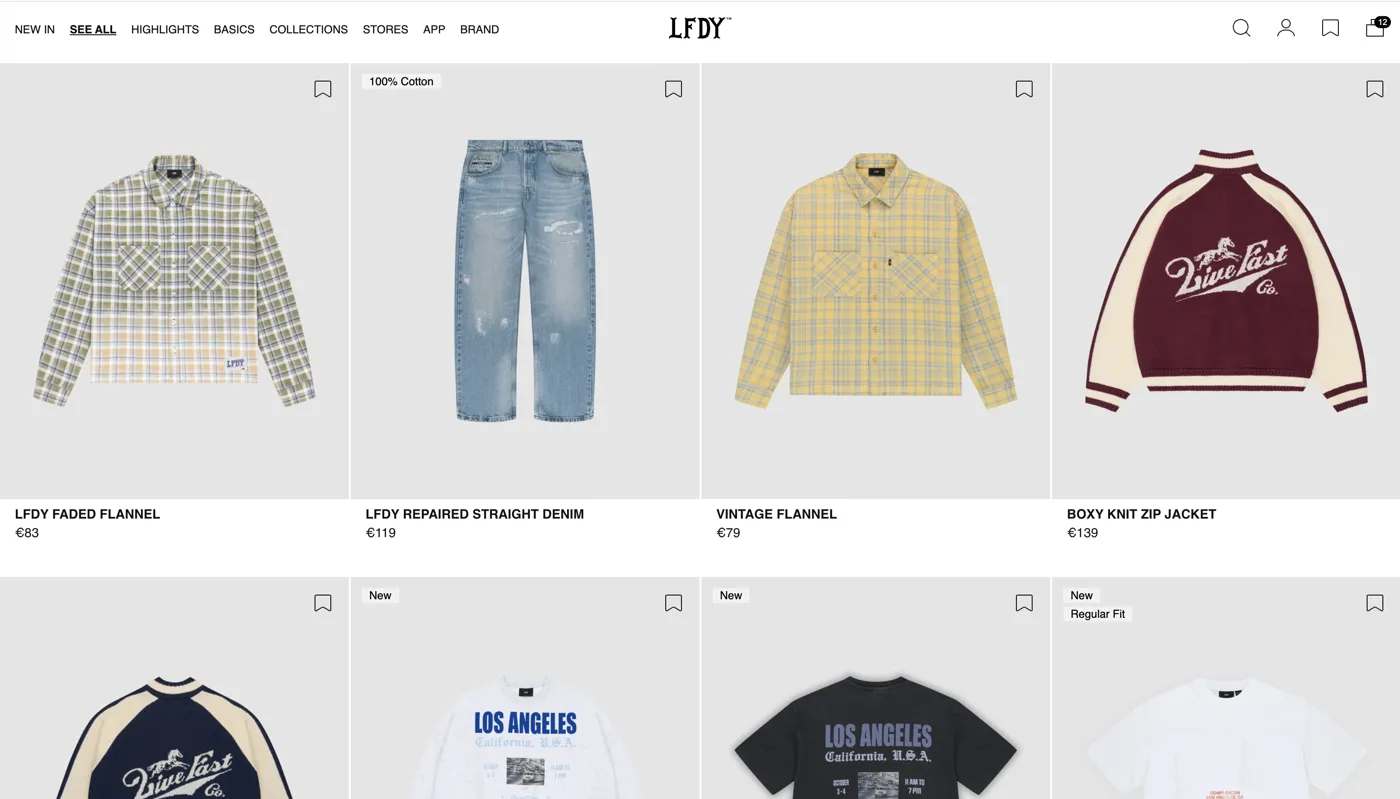
Changes: Collection pages showed flatlay images instead of model images as the primary product image. The product view toggle was hidden in both versions.
Test Results
Test setup: A/B test
Segmentation: No (all users)
Peso: 20 days, sample size of more than 75k, 98.9% significance
LFDY: 22 days, sample size of more than 35k, 92.6% significance
Peso
+ 8.3% Revenue per User
+ 7.13% Add-to-Cart
+ 7.95% Conversions
LFDY
− 10.6% Revenue per User
− 1.4% Add-to-Cart
− 8.14% Conversions
LFDY and Peso reach demographically similar audiences, but their shoppers behave differently. The flatlays clearly won for Peso, while they performed negatively for LFDY.
Conclusion
This result shows why testing is essential: a change that improves performance in one store can have the opposite effect in another, even when the audiences appear very similar. Based on the results, the team decided to:
- Set Flatlay as the default view for Peso
- Set Model as the default view for LFDY
- Improve the LFDY flatlays
- Keep giving users the option to switch between views
For LFDY, the flatlays were completely new. The hypothesis should be retested for LFDY once the flatlays have been improved.
The test compared two collection templates. In Varify, it was easy to set up with JavaScript injection that switched between the templates.